
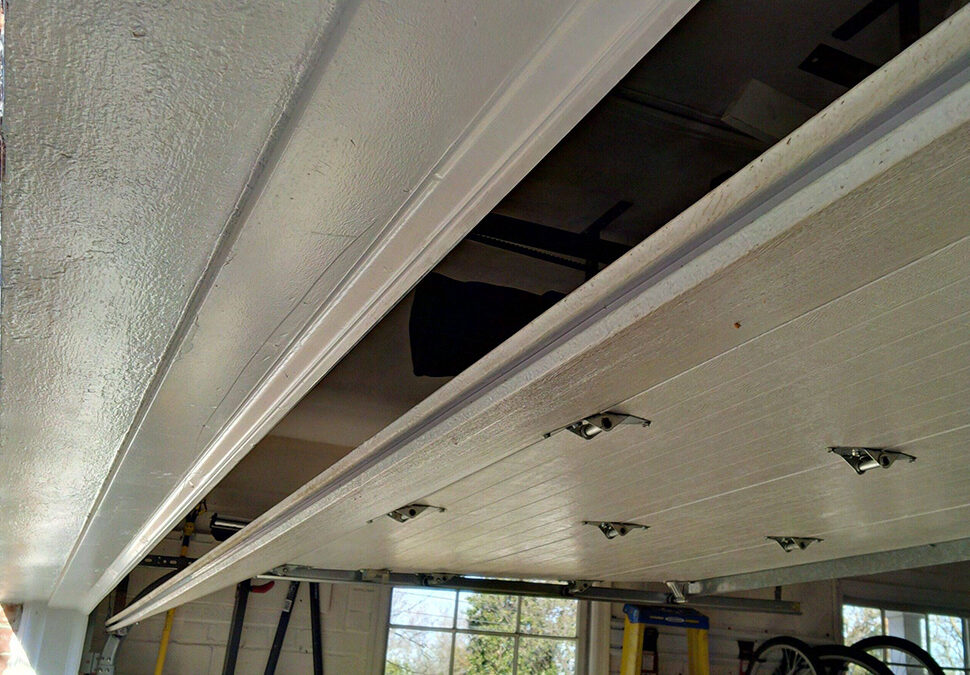
Garage doors make some noise, but a new or louder sound is usually the door telling you something. Learning what each noise means helps you decide whether a little maintenance will fix it or whether it’s time to call a technician.
Squeaking or squealing
Likely cause: dry rollers, hinges or springs.
What to do: apply a garage door lubricant (not grease or a general-purpose spray) to the hinges, roller bearings and springs. Don’t lubricate nylon roller wheels or the tracks themselves. If squeaking continues, worn rollers or hinges may need replacing.
Grinding
Likely cause: worn or damaged rollers, misaligned tracks, or a chain drive opener that needs adjustment.
What to do: look along the tracks for bends and check that the rollers turn freely. Bent tracks and worn rollers should be fixed by a technician, because the door is under spring tension.
Rattling
Likely cause: loose nuts and bolts on hinges, brackets or the opener rail. Doors vibrate every time they move, so hardware loosens over time.
What to do: tighten the hinge and bracket bolts with a socket wrench. Don’t loosen or adjust anything attached to the springs, cables or bottom brackets.
Popping or snapping
Likely cause: torsion springs that are dry or worn, or door sections flexing.
What to do: lubricate the springs. If popping continues, have the springs inspected. They may be near the end of their life.
A loud bang
Likely cause: a broken torsion spring. This often happens when the door isn’t moving.
What to do: stop using the door and opener, and call a professional. Don’t try to lift or adjust the door. Read 7 signs your garage door spring is broken.
Scraping
Likely cause: the door rubbing against the frame or weather stripping, a cable rubbing, or a section out of alignment.
What to do: watch the door as it moves to find the spot. Misalignment and cable issues need a technician. Worn or torn seals can be replaced; see weather stripping.
Humming with no movement
Likely cause: the opener motor is running but can’t move the door, often because of a broken spring, a jammed door or a stripped opener gear.
What to do: unplug the opener and call for service. Running it repeatedly can burn out the motor.
A loud opener
If the door itself is quiet but the opener is noisy, the opener may be worn, or it may simply be a chain drive. Belt drive and wall-mount openers are much quieter. See how to choose a garage door opener.
Quiet-door maintenance checklist
- Lubricate hinges, bearings and springs twice a year.
- Tighten loose hardware (not spring hardware) once a year.
- Replace worn steel rollers with quieter nylon rollers.
- Book a professional tune-up yearly.
Garage door service in Aurora
If a noise doesn’t go away with basic maintenance, our technicians can diagnose and fix it. See our garage door repair and service page, or call (905) 727-1382, Monday to Friday, 7:30 a.m. to 5:00 p.m.